What a Spark Arrest System Does on an Industrial Dust Collector
A spark arrest system is meant to catch a stray spark in the duct before it ever reaches the dust.
October 16, 2026 · 4 min read
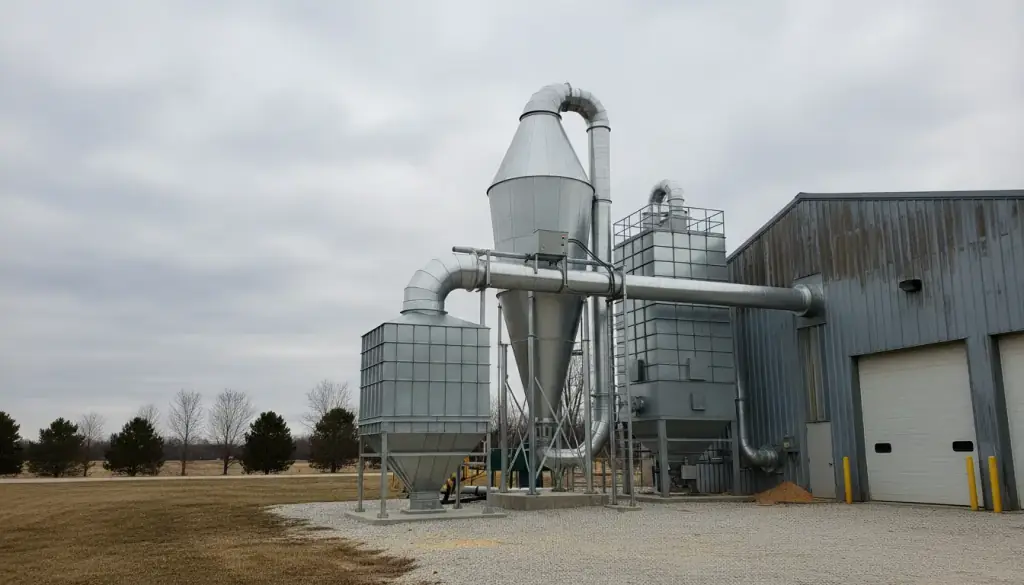
A dust collector is one of the quieter machines in a plant. It hums in a corner or sits out back against the wall, pulling dust, shavings and fines away from the machines that make them. Most days nobody thinks about it. That is exactly why a spark arrest system deserves a conversation before something goes wrong, not after.
What a spark arrest system is for
Dust from wood, metal, plastics, grain and plenty of other materials can burn. Gathered in a hopper, a filter house or a long run of ductwork, it is fuel waiting for a reason. The reason often does not start in the collector at all. A spark from a grinder, a sander, a saw or a cutting table can get pulled into the duct and ride the airstream straight to the collector. A spark arrest system is meant to catch that spark in the duct, before it reaches the dust.
In general terms, these systems watch the duct with sensors. When they see a spark or an ember pass through, they react. Depending on how a given system is designed, that reaction might be an extinguishing action, a diverted airstream, a shutdown signal, or an alarm, or several of those together. What your system does on your collector comes from the manufacturer's documentation and the design for your plant, so ask for it in writing.
Why the collector is worth protecting
Dust collection systems are a major industrial investment. The collector, the ductwork, the fans and the filters add up, and so does the downtime when one of them is damaged. A fire in the collector can also reach the rest of the building. That is why L & M Electric talks about protecting the investment, the facility and the people working in it as one conversation. They are the same conversation.
A collector problem does not always announce itself loudly. An ember can sit in a pile of fines for a while before it shows itself. Catching a spark early in the duct is a different job than dealing with a fire once it has taken hold in the hopper, and it is an easier conversation to have on a quiet Tuesday.
Who should be asking about one
Not every shop needs the same level of protection, and a licensed electrician or your insurer can help sort that out. These are the situations where the question usually comes up:
- Shops that grind, sand, saw or cut materials that make fine dust
- Plants where welding, grinding or other spark-making work happens upstream of a collector
- Facilities where the collector sits inside the building or tight against it, close to people and product
- Operations that have added machines to an old collector over the years
- Anyone whose insurer, fire marshal or safety manager has started asking about combustible dust
Why this is an electrical job
A spark arrest system is sensors, a control panel, a power supply, alarm wiring and interlocks with the collector fan and the machines feeding it. It has to talk to your existing controls so that a detection actually does what it is supposed to do. Hanging a sensor is the easy part. Tying it into the way your plant runs is the part that takes someone who understands the controls.
L & M Electric installs Hansentek Spark Arrest Systems and also handles industrial controls and maintenance, so one crew can look at both sides of the job. We can provide the system and the professional installation, with the goal of reducing your risk from dust collection fire and explosion.
Questions to bring to the first conversation
None of these have one-size answers, but a plant manager who walks in with answers to half of them will get a better design than one who walks in empty handed.
- What material makes the dust, and how fine is it?
- Where in the ductwork are sparks most likely to start?
- How is the collector controlled today, and where would a shutdown signal tie in?
- Who needs to be told when the system trips, and how?
- What documentation does your insurer or local fire official expect to see? They will tell you, so ask them rather than guess.
- Who tests and maintains the system after it goes in?
Treat it like a safety device
Once a spark arrest system is in, it needs checking like any other safety device. Sensors get dusty, wiring gets disturbed by other work, and controls get changed over time. Ask for a testing routine, follow the manufacturer's schedule, and have the system looked at whenever you move or add machines on the collector.
If you run a dust collector in Northern Indiana and want a licensed crew to look at it, call L & M Electric in Goshen at 574-533-4633, Monday to Friday, 7:00 am to 4:00 pm. You can read how we approach it on the dust collection spark arrest page, and the industrial controls page covers the control side of the work.
L & M Electric, Inc., 574-533-4633
Call 574-533-4633More articles
Plan Your Electrical Service So Expansion Is Not a Rip-Out
The cheapest time to make room for the next expansion is while the first one is still being wired.
When Parking Lot Pole Lights Go Dark: What Usually Fails
A dark parking lot is a safety problem first and a lighting problem second, and the pattern of what is out points to the cause.