What Thermal Imaging and Power Recording Find in a Panel
Two tests that show you problems a flashlight and a hunch never will.
October 16, 2026 · 4 min read
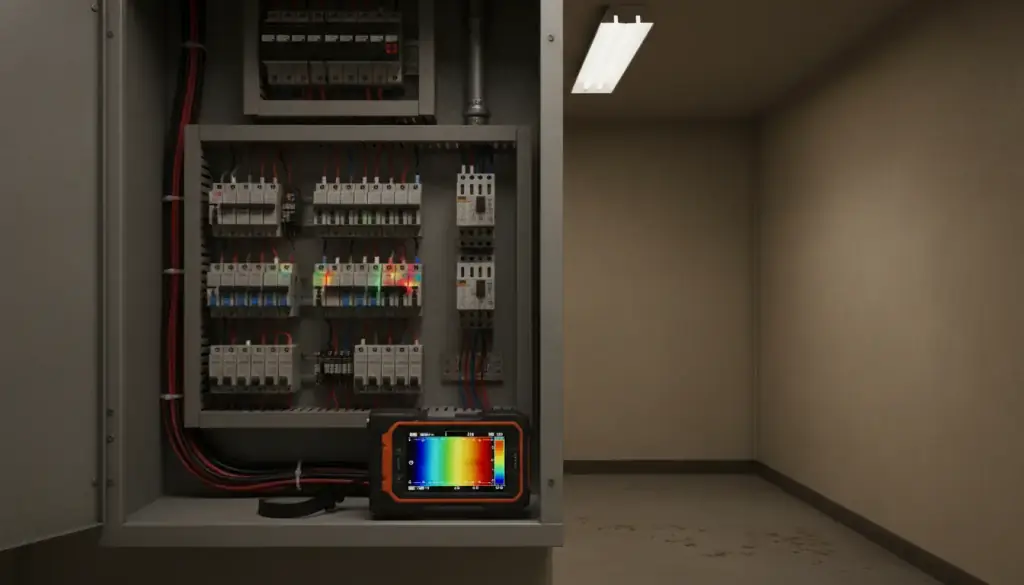
Most electrical trouble does not start with a bang. It starts with a connection that is a little looser than it should be, a circuit carrying a little more than it was designed for, or a voltage that wanders a little more than your equipment likes. By the time you can see or smell it, you are already in repair mode. Thermal imaging and power recording are two ways to see the earlier version of the problem.
What thermal imaging shows
A thermal camera sees heat instead of light. Aimed at electrical equipment that is running, it produces a color picture where hotter spots stand out against the cooler parts around them. That matters because electrical problems tend to make heat. A loose or corroded connection resists the current going through it, and resistance turns into heat.
So when a technician scans a panel, a disconnect or a motor control cabinet, the picture can point to a single hot connection, a breaker running hotter than its neighbors, or a circuit that looks to be carrying more than it should. The camera does not tell the whole story by itself. A technician has to read the picture, compare it to the load on the equipment at the time, and decide what it means. But it can point right at the part to look at, without anyone shutting down the building first.
What power recording shows
Thermal imaging is a snapshot. Power recording is the video. A recorder is connected to the electrical system and left in place for a period of time, logging what the power does: voltage, current, how the load is shared across the phases, and when things change. Some problems only show up for a few seconds at a time, and a recording catches them where a one-time visit would not.
This is the right tool when the complaint is hard to pin down. Equipment that resets for no clear reason. Lights that dim when a big machine starts. A breaker that trips at the same time every afternoon. A motor that runs hot. The record shows what was happening on the system at those moments, so the conversation moves from guessing to looking at data.
Why the two work well together
Heat points to where, and recording points to when and why. A hot connection on a panel might be a single loose lug, or it might be the sign of a circuit that is regularly overloaded. The recording tells you which. A recording that shows a heavy load at certain hours tells you where to point the camera. L & M Electric offers both, along with power evaluation, under commercial and industrial service.
What you can expect to get
- Thermal pictures of the equipment that was checked, with the hot spots marked
- A record of what the power did over the period it was monitored
- A plain explanation of what the findings mean for your equipment
- Recommendations on what to tighten, replace, rebalance or upgrade, in the order that makes sense
When it makes sense to call
- Breakers that trip repeatedly with no obvious cause
- Flickering or dimming lights, or equipment that resets by itself
- Motors or equipment that run hot
- Before you add significant load, so you know whether the existing system can take it
- As part of a planned maintenance routine for a building you depend on every day
- When an insurer, owner or inspector has asked about the condition of your electrical equipment
A note on safety
Checking the inside of electrical equipment is work for a licensed electrician with the training and protective equipment for it. Panels and cabinets contain live parts, and a cover that looks harmless can be hiding a serious hazard. If you see scorch marks, smell something burning, hear buzzing from a panel or notice a panel that feels warm, leave it closed, keep people away, and call a licensed electrician. If there is smoke or fire, get everyone out and call 911.
Turning findings into a plan
A report is only useful if something happens next. Some findings are small, like retightening a connection. Others point to bigger decisions, like adding capacity, rebalancing circuits or planning a service upgrade. We try to lay those out so you can see what is urgent and what can wait for a scheduled shutdown, and so that the work gets done on schedule and within your budget.
If you want a better look at the health of your electrical equipment, call L & M Electric in Goshen at 574-533-4633, Monday to Friday, 7:00 am to 4:00 pm. The power diagnostics page explains thermal imaging and power recording in more detail, and the service upgrades page covers what happens if the answer is more capacity.
L & M Electric, Inc., 574-533-4633
Call 574-533-4633More articles
What a Spark Arrest System Does on an Industrial Dust Collector
A spark arrest system is meant to catch a stray spark in the duct before it ever reaches the dust.
Plan Your Electrical Service So Expansion Is Not a Rip-Out
The cheapest time to make room for the next expansion is while the first one is still being wired.